THE EASTER BUNNY DIED FOR YOUR SINS
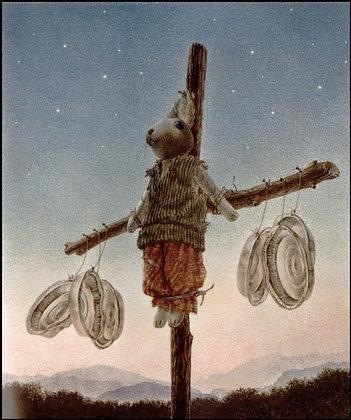
(Illustration by Bagram Ibatouilline, from The Miraculous Journey of Edward Tulane by Kate Camillo.)
28
Mar
(Illustration by Bagram Ibatouilline, from The Miraculous Journey of Edward Tulane by Kate Camillo.)
20
Mar

27
Feb
So I contacted DC about the mistaken “created by” credit on Vibe. Helpfully, they’re removing the “created by” credit entirely.
— Gerry Conway (@gerryconway) February 22, 2013
(This is apparently not the only such instance; Mark Waid noted in response to Conway that he did not get a creator credit for Impulse on Young Justice.)
It’s really simple: this is completely indefensible. Completely. It’s all the more shameful when you consider that DC, following their granting of a pension to Siegel and Shuster, was the comics company that trumpeted their creators front-and-center and pioneered the practice of putting creators’ names on the cover. I strongly suspect Man of Steel (which I really want to see) will be the last DC-themed anything I purchase for quite some time, and I already know I’m going to have to counterbalance it with an equal donation to the CBLDF or something just to keep from feeling guilty.
12
Feb
So a few years ago I pointed out that Mortal Kombat vs. DC Universe was a terrible and stupid idea, and that if you are going to have a DC fighting game, then it should be a game where the characters are all super-strong and punch each other through buildings and where everything explodes when you throw it at people, and it appears that DC paid attention and then, because we are talking about DC Comics here, did it, but went and fucked the bag.
Because come on. A game where you have Harley Quinn and the Joker fighting Superman is a stupid game. A game where Batman, who is not even in Bat-Hyper-Power-Armor, can punch Doomsday through a building is a stupid game. A game where DC heroes are trying to murder the other guys (seriously, look at Superman and his heat vision and tell me he is not in killing-psycho-mode) is a stupid game. Basically, DC should have run the hell away from the Mortal Kombat people, but instead decided that what they really needed to do was embrace the terrible Mortal Kombat people and not incidentally run with all of the worst design ideas invented in Arkham City (“hey, let’s take Arkham Asylum and, you know, basically make it worse in every possible way”), except even more than that. As I have said before: as a general rule, DC Comics and good video games go together like Santa Claus and conquering the Martians.
(Man, imagine how much more pissed I might be if I still bothered to read DC comic books. Which I don’t. I don’t even bother pirating them, because DC comics are so unreadable these days that they are not worth “free.”)
1
Jan
Proof that 2013 has quite a bit of fucking up in order to match 2012:
I dunno. It’s no Ponponpon, but it’s still pretty weird. PSY doesn’t even begin to measure up to the glorious tiny mountain of WTF that is Kyary Pamyu Pamyu.
19
Dec
Charlotte Allen: This massacre might not have happened if some manly men were working at the school rather than weak, helpless women.
Jim Daly: The massacre was horrible, but it’s Christmas!
Anthony Daniels: The problem is that people think they deserve to be happy. Also, psychology is bullshit.
Charles A. Donovan: It was all downhill from A Clockwork Orange for our culture.
David French: Trying to create policy solutions to avoid tragedies like this is pointless, because we are meant to suffer like Job.
Roger Kimball: Evil. Man, I don’t know.
Thomas Lickona: There are so many possible causes for this tragedy – like freely available guns, or the interference of demons – that we cannot truly ever know why it happened.
Emily Stimpson: Free will is part of God’s plan and Jesus loves us.
Heather MacDonald: School shootings are so rare that policy proposals may be overreactions. Therefore, we should study the problem more because we do not have enough data yet.
Father Gerald Murray: The massacre was horrible, but it’s Christmas!
Michael Pakaluk: We should all give thanks that we haven’t gone on a mass killing spree.
10
Oct
(commentary requested by several people.)
So, as we all know, Scott Kurtz believes that thinking that Jack Kirby was screwed by Marvel and doing something about it is “slacktivism” and moral self-aggrandizement. (As Leonard Pierce pointed out, suggesting that people donate to charity the price of an Avengers movie ticket was precisely the opposite of slacktivism, but whatever.)
However, we now learn that Scott Kurtz is also terribly upset by the fact that people other than Charles Schulz are continuing to create Peanuts content. One would note that Charles Schulz’ estate – unlike that of Jack Kirby – actually profits from these new works, which puts them on far more solid moral ground than Marvel Comics currently possesses. But one of these things bothers Scott Kurtz and the other does not.
This is so profoundly inconsistent I don’t know where to begin. Honestly, it is a giant wall of “what the fuck?” I mean, look at this quote right here:
Dear America, it’s okay for things to die. It’s poetic and gives the work more meaning that there ISN’T more of it.
Unless, of course, it’s The Avengers, which were nurtured by generations of caretakers like they were fine wine.
Of course, mockery is besides the point, because we all know Kurtz’ objections aren’t based on any moral or ethical grounds, but instead purely on his whims. He’s a purist when it comes to Peanuts1 because he loves the classic strips. He’s a pragmatist2 when it comes to Marvel properties, because he likes reading current comics. The fact that in one case the family of the creator of the work benefits and in the other the family of the creator of the work gets screwed is entirely besides the point, because Kurtz isn’t concerned about what is fair or what is just to them.3 He’s concerned – like so many nerds are – about how these things affect him.
Why anybody would expect more is really beyond me, but there you go.
27
Sep
“But what – I don’t even – no, how can this be?”
said the viewer, confused, as he watched quietly.
“This ad is pathetic! It’s smug and unfunny,
a terrible waste of some PAC’s money -
the metre is off, the rhymes often are forced,
and from any real argument it seems quite divorced.
They managed to screw up a Sam Jackson rant!
That’s what was needed! Not some tiresome chant
that spares us the details and instead is hysteric
in a way that is vague and even generic.
Just wait for the “fact-checkers” to wade into this mire
Because it’s non-specific, they’ll say “pants on fire”
And the ad will have made of its goal so much mince
Because this commercial was supposed to convince.
Which it won’t, since it’s boring, and it’s self-impressed
with its moral high ground as it’s beating its chest.”
Sighed the viewer at all of the censored “fucks,” -
“at least nothing changes just because this sucks.”
23
Jul
Let’s face it, we all know that ‘The Dark Knight Rises’ is likely to be the end of the Christopher Nolan Batman continuity. He did two good movies and one truly excellent one (I’ll leave it to you to decide which one you think was the excellent one, but hint: It had the Joker in it) and is now moving on to what sounds like a truly fascinating Howard Hughes bio-pic. The reboot will probably hit theaters in about 2016, just in time to tie in with the Justice League movie…or it would, if that didn’t get delayed to 2025 while Warner Brothers tries to hammer out a few details in the script to make it not so much like the mega-hit “Squadron Supreme” movie Marvel did a few years earlier. (Oh, I’m sorry. Is my faith in DC’s movie division showing?)
But if we did get a fourth movie, where would it go from the end of the third? A spoiler tag, for those of you uninterested in speculating just yet…
continue reading "The Two Post ‘Dark Knight Rises’ Directions"
13
Jul
It’s bad enough that Daniel Tosh started talking about how funny rape jokes are. I’ll admit, that’s about the level of “humor” you’d expect from a man whose TV series consists of him showing YouTube videos and saying, “Hey, these people are dumbasses,” but it’s still a level of humor that you normally expect from that one guy in the fraternity who doesn’t realize that awkward silence doesn’t actually mean they’re secretly agreeing with you and don’t want to admit it. It is far, far worse when someone in the audience finally got fed up with how much of a worthless shit of a human being he was and called him on it, he responded by suggesting it would be funny if that person was gang-raped by the rest of the audience. (I sincerely hope that all of you are responding with, “Wait, he did what now?”) These things are terrible, but I will admit that my opinion of Daniel Tosh was already low enough that finding out he was inciting people to sexual assualt did not actually do much to make me think less of him.
I will admit, it made me think quite a bit less of talented comedians like Louis C.K. and Patton Oswalt to find out that they were defending this as an exercise of free speech. Because while the initial monologue is free speech and must be defended as such, his response to the heckler would have to be considered as incitement to violence, which is not constitutionally protected. (You could, I suppose, argue that while his statement was clearly “directed to inciting or producing imminent lawless action”, it was not “likely to incite or produce such action”. But given that the woman felt threatened enough to immediately leave the building, I would say that Tosh has no more grounds to his defense than I would if I was in the audience and started shouting about how funny it would be if we all started throwing our glasses at the stage. A room full of mildly intoxicated people is enough of a twitchy thing that I’d say any comments inciting them to violence are a terrible mistake.)
But here is the lesson for today: FOR FUCK’S SAKE, people, if you do hear about this, and you absolutely must feel compelled to defend Tosh’s actions as anything other than, “Have you seen this guy? He’s so coked up he doesn’t know what he’s doing half the time! If he has pants on, it’s a good day for him! You can’t take anything that comes out of his mouth as being meaningful; it’s like getting mad at the chimp for throwing shit at you! He’s never going to learn to behave like a civilized human being, and at least putting him on stage at a comedy club keeps him off the streets…”
…then please, do not fucking argue, “Well, she was a heckler, and heckling is such a social faux pas that people who do it deserve to be humiliated by the comedian that they just insulted. After all, Don Rickles and George Carlin and Richard Pryor did that kind of thing all the time!” Because saying this is a very good sign that you are not a decent human being, and if you find that statement leaping to mind as your defense, it is time to sit down for some serious introspection. (Michael Richards quit stand-up and went to Angkor Wat. I’m not suggesting that you go to Cambodian temples to get your head straight, but there are probably some very nice Buddhists in your own home country who can help.)
Because Daniel Tosh did not humiliate that woman. She did not leave that club as fast as she could because she felt humiliated. She left because she felt threatened. Put as kind a face on it as you want, suggest that the threat was not meant seriously if you feel like it, but Daniel Tosh threatened her for talking back to him. There is no fucking act of speech that should ever get, “I want the people in this room to gang-rape you” as a response. And yeah, this is one of those things that I’m going to act all self-righteous about, because yes, I am better than someone who thinks it’s okay to threaten a woman with sexual assault when she says a comedian isn’t funny. It’s not that high of a bar. And yes, even though people say this about just about everything on the Internet up to and including preferring Nightwing to Batman…disagreeing with that really does make you a worse human being. Sorry if you’re just now finding that out, but better you hear it from me than someone else.
16
May
So apparently George W. Bush plans to “publish a book outlining strategies for economic growth.”
No. Really.
Prospective titles for this book include
Don’t Know Much About (Economic) History, The One Percent Solution,, and Hey, If You Turn That Chart Upside Down It Looks Great!
11
May
She starts by asserting that Winter Wipeout is proof that gay people want heteros to suffer and… it actually manages to go downhill from there.
Also, watch the guy behind her. His reactions are hilarious.
26
Mar
Every time I hear about Geraldo Rivera’s comments on the Trayvon Martin shootings, I always picture him talking to the victim’s family. I picture him sitting there, an expression of Sincere Concern on his face (the one he’s practiced over years of TV “journalism”), perhaps putting a hand on one family member’s knee in a sort of “There, there” gesture. And I picture him trying to explain the position he’s apparently decided is the sensitive, honest and concerned stance to take.
“Yes,” he says, “on the one hand, George Zimmerman did hunt down and kill your unarmed son in cold blood after being instructed by police not to follow him. That’s certainly half the problem. But just as importantly, well…your son wasn’t exactly dressed formally, was he? I think we have to place at least as much of the blame on your son’s clothing choices as we do on the decisions of the raving paranoid who followed your son down the street and then shot him in broad daylight. If he hadn’t been so, well…slovenly…then I feel that there was a very good chance that Zimmerman might have decided your child was ‘one of the good ones’, and left him alone. We’ll never know, of course, but I think that if black people don’t follow the unspoken dress code that white people have decided on for you, then any consequences of that are really on your own head. But, you know, I’m not blaming your bad parenting or your son’s sloppy dress choices. You just didn’t know that wearing a hooded sweatshirt in a nice neighborhood was a possible death sentence for a young black man. Now that you’re aware, I’m sure that you and all your kind will remember your place from now on, and unfortunate incidents like this won’t happen again.”
And he wonders why someone hit him in the face with a chair once…
13
Feb
I suspect that very few of you know what ‘The Shining’ is really about. You might think you know; you might talk about themes of isolation, claustrophobia, and the darkness in the human spirit made manifest as a “haunted” hotel. But you’d be wrong. You probably aren’t aware of the hidden messages about the dangers of going off the gold standard. You didn’t even know that it was a hidden confession from Stanley Kubrick explaining that he faked the moon landing footage. You hadn’t the slightest clue of its hidden warnings about the Mayan apocalypse in 2012. And you…okay, you probably knew about the secret subtext relating to America’s treatment of Native Americans. That one’s so well-known that even Cracked.com covered it. But you probably didn’t know about all of the hidden meanings, because you simply can’t. There’s so many hidden meanings that there’s a whole other movie coming out just about all the meanings in the first movie.
In all seriousness, what does make ‘The Shining’ such a popular subject for such a diverse range of “cryptic meaning” essays? Surely if Kubrick really had a message he was trying to convey, no matter how cleverly he concealed it, you’d expect to get some kind of consensus as to what it might be. But (for those of you who really don’t feel like sitting through a 40-minute YouTube video, or spend an hour or so looking at screenshots) Kubrick’s film almost seems to become a sort of Rorshach test, continually revealing cryptic messages that just happen to exactly coincide with the researcher’s personal perspective. Why? What is it about ‘The Shining’ that makes it more confusing than ‘The Prisoner’? What makes this film the one that people fixate on, while ‘Donnie Darko’ (to name another cult film that plays its cards close to the vest) seems to avoid these kinds of questions? I don’t know that we can ever know for sure, but here are my suggestions.
1) Kubrick isn’t talking. Well, I mean…of course he’s not talking now, but even when he was alive, he wasn’t talking about his movies. Kubrick had a reputation as a notorious recluse, but it would be more accurate to describe him as someone who just didn’t give interviews. He was perfectly content to be social, but he also hated the way that filmmakers who loved to talk about their work had reduced watching a movie to a sterile exercise in spotting the things the director had talked about in a magazine. He didn’t want you to be thinking about the technical reasons that the hedge maze had replaced the hedge animals (budget constraints, for the record–moving hedge animals weren’t technically feasible in 1980.) He wanted you to be watching the movie, and to let you come to your own conclusions about it. Seen from a certain point of view though, a reclusive movie-maker who doesn’t want to talk about his movies because he wants you to “work it out for yourself” can sound like someone who’s embedded a secret meaning. The more mystery invested in the process, the more people expect from the ultimate solution. “Some people are just crazy” is not going to satisfy them.
2) Kubrick had a reputation as a perfectionist. Time and time again, as you read these analyses, you’ll come across a phrase that’s almost word-for-word identical every single time: “A legendary perfectionist like Kubrick certainly wouldn’t allow such an obvious continuity error.” It is a prima facie assumption made in all of these analyses that any apparent mistake in the film must be placed there deliberately, as Kubrick was known for being a perfectionist. These must be hidden messages, because Kubrick doesn’t make mistakes.
This is, of course, an assumption so wrong that it almost has to be unpicked word-for-word. Kubrick was a notorious perfectionist, true, but “perfectionist” in this case doesn’t mean “meticulous about set continuity.” Kubrick’s reputation came from his habit of shooting far more film than was necessary, sometimes doing 80-100 takes of a single scene, in order to get the widest possible ranges of performance from his actors and to force them to genuinely inhabit their characters. ‘The Shining’ was no exception; Kubrick spent 200 days in principal photography for a 144-minute film. (This means that on average, Kubrick shot about 45 seconds of usable footage per day. Almost certainly, there must have been whole months worth of days where he shot nothing at all that he used in the final film.) Kubrick was a perfectionist in that he wanted the perfect take, and was willing to shoot as long as was needed until he got it; and once he was armed with all those perfect takes, he would go into the editing room and spend months assembling them into a finished film.
But there’s a big difference between that and being precise about continuity. In fact, Kubrick’s approach works against tight set continuity; when you’re shooting 30, 40, 50 takes of one shot, even going back the next day for more, then of course tiny details aren’t going to be the same from shot to shot. Kubrick wanted the perfect emotional resonance, not the perfect amount of sandwich eaten from moment to moment. Even if he did notice the continuity problems (and he almost certainly did) what was he going to do once he was in the editing booth? Throw out the best performance because the scrapbook was on the wrong page? Kubrick had to be aware that only obsessive viewers notice continuity mistakes to begin with, and he almost certainly had more important things to concern himself. But to the ‘Shining’ enthusiast, each of these tiny mistakes has to be a deliberate message, because they assume Kubrick is a genius who doesn’t do anything by accident.
3) The movie is different from the book. This is true of just about all adaptations, of course, but there’s a little more to it here. One, Kubrick didn’t discuss why he made the changes he made when adapting the novel. (See above.) Two, it’s assumed that a legendary perfectionist like Kubrick wouldn’t make arbitrary changes unless he had a grand vision to them. (See above.) And three, King and Kubrick were legendarily at odds over the adaptation, with King going so far as to write and direct his own adaptation that was more to his liking. With the theme of “changes from the book” highlighted, everyone’s attention is drawn to them. And again, we’re back to the “hidden messages” territory, with every tiny alteration assumed to have cryptic meaning, from the hotel’s origin to its final fate and everything in between.
Again, though, this assumes that Kubrick was able to work in the realm of pure art, with no concessions needing to be made to practicality. Subplots like the simmering conflict between Ullman the hotel manager and Jack, or backstory like his assault on a student at Stovington Prep? Dropped for time, perhaps, because the movie is already over two hours long and there’s not even a mention of them. Wendy and Danny seem different because the characters wound up being interpreted by actors, and because certain elements had to be emphasized and dropped to get the film down to a manageable running time. Logistically difficult effects, such as the destruction of the Overlook Hotel or the moving hedge animals, had to be dropped completely. Nobody ever gets to do everything the way they want to entirely…except maybe George Lucas, which may explain why it’s not such a good thing…and Kubrick is certainly no exception. But if you’re not willing to believe that, then each change takes on a special significance.
4) The ending is ambiguous. Sure, we know that Jack died. But then we get that last cryptic scene, of the photograph in the empty hotel filled with mysterious people and Jack at the center. The caption, “July 4th Ball, 1921.” It has to mean something. It’s the final shot of the film, the one that Kubrick wants us to leave on, the one he wants to resonate in our heads as we’re leaving the theater. He actually went so far as to cut an epilogue out of the film after it reached theaters, so that all we see is the cut from Jack’s body to the mysterious photo. A cryptic ending like that is one that demands endless analysis, deeper investigation, because we want things to make sense. And that ending really, really doesn’t, at least not in a logical and linear sense. (It says a lot that even after “notorious recluse” Kubrick came out and blatantly explained the ending to everyone, people still don’t believe it.) Whatever conclusions you come to about the final shot, you bring something of your own ideas and experiences to it…which leads us to…
5) People really, really like to create patterns. It’s human nature, and the final element that brings the first four together. Once you’ve decided that there is a hidden meaning to ‘The Shining’, once you’ve started looking at it not as a film but as a series of cryptic messages encoded into tiny details, then there’s a sufficiently large mass of data present that you can draw any number of connections between data points based on your own personal viewpoint as a lens. Think that Kubrick was a numerologist? Examine the time codes, you’re bound to find a pattern of significant shots at significant times. (Because Kubrick didn’t really put in any scenes that he didn’t think were important.) Want to find messages about your own personal political, mystical, or historical views? They’re bound to be there if you think symbolically enough and are willing to put in some work massaging the data. (Remember, numbers are infinitely transformable. Add, subtract, multiply and divide and 7/4/1921 can become any set of numbers you care to name.) And ultimately, you will come away convinced that Kubrick’s message was about exactly what you want it to be about. It’s a comforting thought, really. Kubrick must be a genius for hiding such an intricate message in the film, and you must be a genius for being able to find it. The two of you no doubt think alike, and wouldn’t we all want to think of ourselves as being in the company of geniuses?
For myself, I don’t think there is a hidden message in ‘The Shining’. I think that Kubrick, like all great artists, loved ambiguity, and loved to insert it in the work instead of forcing his own conclusions onto you. You are required, by design, to think about what’s going on in front of you because the answers are not provided, and Kubrick isn’t telling because your answer is probably better than his anyway. I think he’d probably be impressed at some of the creativity people have brought to finding meanings in his film…even if I can easily picture Wendy looking at Jack’s manuscript and reading, “It can be ruled out that Stanley Kubrick didn’t notice this obvious mistake as he precisely edited the shot that way for a reason and we all saw it happen…”
"[O]ne of the funniest bloggers on the planet... I only wish he updated more."
-- Popcrunch.com
"By MightyGodKing, we mean sexiest blog in western civilization."
-- Jenn